
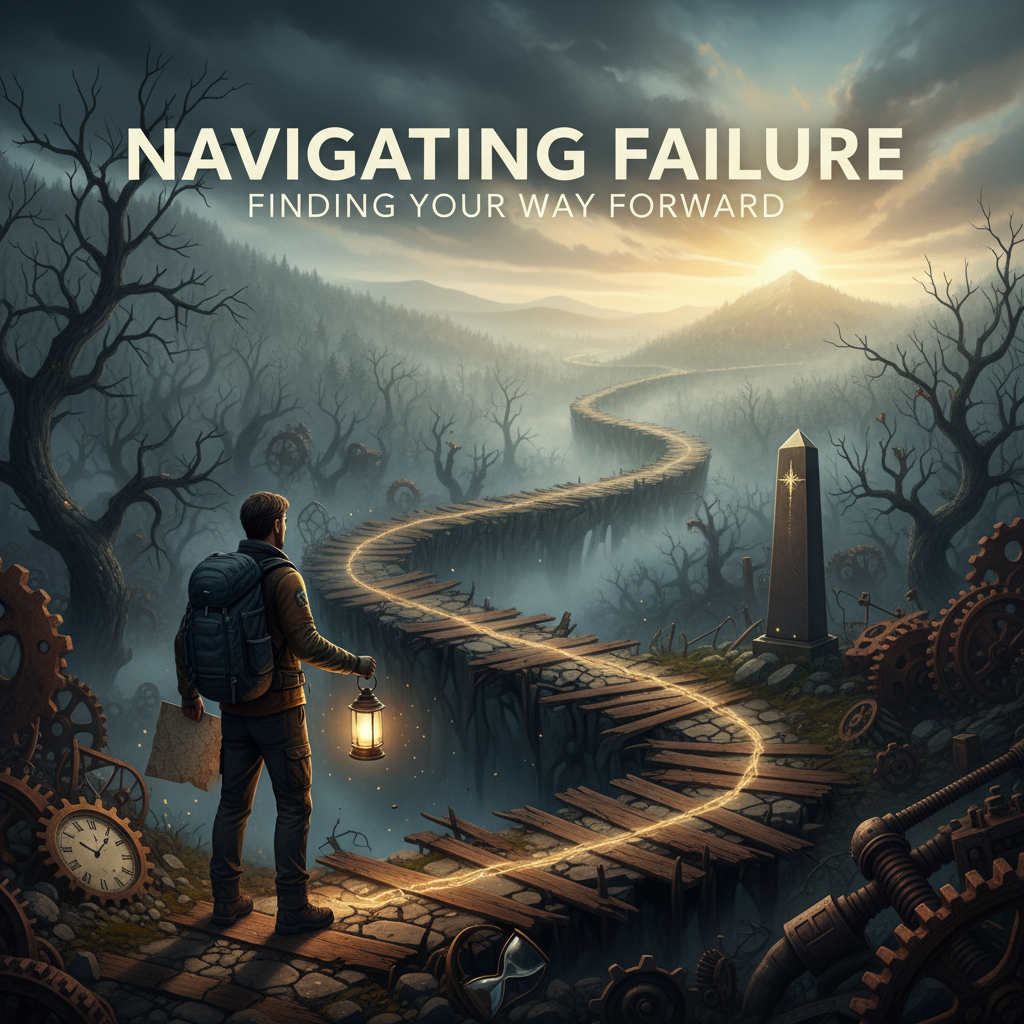
Navigating Failure: How to Turn Setbacks into Stepping Stones for Success
Feeling like you’ve hit a wall after a setback? You are not alone. Society often shows us a highlight reel of success, making any misstep feel like a personal catastrophe. However, the true skill isn’t in avoiding mistakes, but in mastering the art of navigating failure. This process is not about dwelling on what went wrong; instead, it is about transforming disappointment into a powerful engine for growth. By shifting your perspective, you can clearly see that failure isn’t the opposite of success—it’s an essential, and often necessary, part of the journey toward it.
Table of Contents
- Why We Fear Failure So Deeply
- The Hidden Gifts: Unexpected Benefits of Failing
- Sparks Creativity and Innovation
- Builds Unshakeable Resilience
- Provides Invaluable Learning Lessons
- Fosters Humility and Empathy
- Your Step-by-Step Guide to Bouncing Back
- Step 1: Acknowledge Your Emotions
- Step 2: Reframe the Narrative
- Step 3: Take Ownership (Without Blame)
- Step 4: Conduct a “Post-Mortem”
- Step 5: Create a New Action Plan
- Adopting a Growth Mindset for Long-Term Success
- Conclusion: Embracing the Journey
Why We Fear Failure So Deeply
The experience of failure often brings a storm of difficult emotions. Feelings of embarrassment, anxiety, sadness, and shame can be overwhelming. These are completely natural human responses to not meeting our own or others’ expectations. Consequently, our first instinct is often to hide or ignore these feelings. Pushing them away, however, can hinder our ability to learn and grow. The first courageous step is simply allowing yourself to feel these emotions without judgment. Acknowledging and naming them—whether it’s anger over a mistake or sadness from a disappointment—is critical for processing the experience constructively.
For many, this fear is tied directly to their sense of self-worth. We mistakenly believe that our failures define who we are. This deep-seated fear can lead to self-sabotaging behaviors like procrastinating on important projects or making excuses in advance. In more extreme cases, the fear becomes so paralyzing that people avoid taking risks altogether. As a result, they miss out on incredible opportunities for both personal and professional achievement. Understanding this psychological connection is key to untangling your worth from your outcomes.
The Hidden Gifts: Unexpected Benefits of Failing
While emotionally challenging, failure offers a wealth of benefits that are often overlooked in our success-obsessed culture. Embracing setbacks helps cultivate a growth mindset, which encourages you to see challenges as opportunities for improvement rather than as final judgments on your abilities. This perspective is absolutely crucial for continuous development. Let’s explore some of these unexpected advantages.
Sparks Creativity and Innovation
Failure can be a powerful catalyst for creativity. When your usual methods don’t work, you are forced to think differently and find new solutions. For instance, this pressure pushes you beyond your established patterns of thinking and encourages you to explore unconventional ideas. Many of history’s greatest innovations, from penicillin to Post-it Notes, were born from experiments that were initially considered failures. Setbacks force you to ask, “What’s another way to approach this?” and that question is the very foundation of innovation.
Builds Unshakeable Resilience
Resilience is not something you are born with; it is a skill that is built over time, much like a muscle. Each time you face a setback and work to overcome it, you strengthen your mental and emotional fortitude. The process of bouncing back from adversity teaches you how to adapt and persevere. Consequently, you become better equipped to handle future challenges with grace and confidence. Someone who has never failed has never had the opportunity to discover their own strength.
Provides Invaluable Learning Lessons
Failure is arguably the most effective teacher. It provides direct, unfiltered feedback on what doesn’t work, which in turn guides you toward what will. Analyzing the reasons behind a failure can lead to a much deeper understanding of your process and improve your decision-making in the future. In fact, to experience a setback and not pause to learn from it is to fail twice. Each mistake contains a priceless lesson waiting to be uncovered, offering a blueprint for future success.
Fosters Humility and Empathy
Experiencing your own shortcomings can be a very humbling experience. It grounds you and provides a healthy dose of perspective, especially when you are on a path of achievement. Additionally, walking through your own struggles makes you more compassionate and supportive of others when they make mistakes. This shared human experience fosters a stronger sense of connection and empathy, reminding us that everyone is learning and growing at their own pace.
Your Step-by-Step Guide to Bouncing Back
Effectively navigating failure requires a conscious and proactive approach. Instead of dwelling on the negative, you can adopt specific strategies to transform these experiences into launchpads for future success. This toolkit provides a clear path forward.
Step 1: Acknowledge Your Emotions
The journey begins with emotional honesty. Before you can analyze or learn, you must allow yourself to feel the disappointment, frustration, or sadness that comes with failure. Pushing these feelings aside only delays the healing process. Give yourself permission to be human. Acknowledging your emotions without judging them is a sign of strength, and it is the necessary first step toward moving on.
Step 2: Reframe the Narrative
The words you use to describe your experience have immense power. Labeling an outcome as a complete “failure” can feel final and devastating. Instead, try reframing it with more neutral or growth-oriented language. You might call it an “unexpected result,” a “learning opportunity,” or simply “not successful yet.” This subtle shift in language opens your mind to seeing the possibilities within the experience rather than just the disappointment.
Step 3: Take Ownership (Without Blame)
It is important to honestly assess your role in the outcome without falling into the trap of self-blame or blaming others. Taking appropriate responsibility means identifying what was within your control and what was not. This clear-eyed assessment is key to discovering areas for personal growth. It’s not about assigning fault; rather, it’s about empowering yourself to make better choices next time.
Step 4: Conduct a “Post-Mortem”
A crucial step in learning from any setback is to analyze what happened. Ask yourself a series of objective questions to extract valuable lessons. For example: What were the main factors that contributed to this outcome? What assumptions did I make that turned out to be incorrect? Most importantly, what specific actions can I take differently in the future to achieve a better result? This analysis turns a painful event into priceless data.
Step 5: Create a New Action Plan
After you have processed your emotions and analyzed the lessons, it’s time to look forward. Use your newfound insights to create a concrete plan of action. This plan might involve learning a new skill, adjusting your strategy, or setting more realistic goals. This forward-looking step shifts your focus from past mistakes to future possibilities and helps you regain momentum. It’s a proactive way to think about how to fuel explosive growth in your next venture.
Adopting a Growth Mindset for Long-Term Success
Underpinning all these strategies is the power of a Growth Mindset, a concept researched by psychologist Carol Dweck. This is the belief that your abilities and intelligence can be developed through dedication and hard work. People with a fixed mindset, on the other hand, believe these traits are static. Embracing a growth mindset is fundamental to navigating failure successfully because it allows you to view challenges not as threats to your ego, but as exciting opportunities to learn and expand your skills. This mental shift is fundamental to building confidence, not just in your projects, but in your innate ability to adapt and overcome whatever comes your way.
Conclusion: Embracing the Journey
In conclusion, failure is an inevitable and profoundly valuable part of life. By understanding the psychology behind our fears and actively using strategies to learn from our mistakes, we can transform setbacks into powerful catalysts for growth. The ability to navigate failure with resilience and grace is more than just a sign of strength—it is a foundational skill for achieving meaningful, long-term success. So, the next time you stumble, remember that you are not at an endpoint. You are simply on a necessary detour on the path to becoming a stronger, wiser, and more capable version of yourself.