
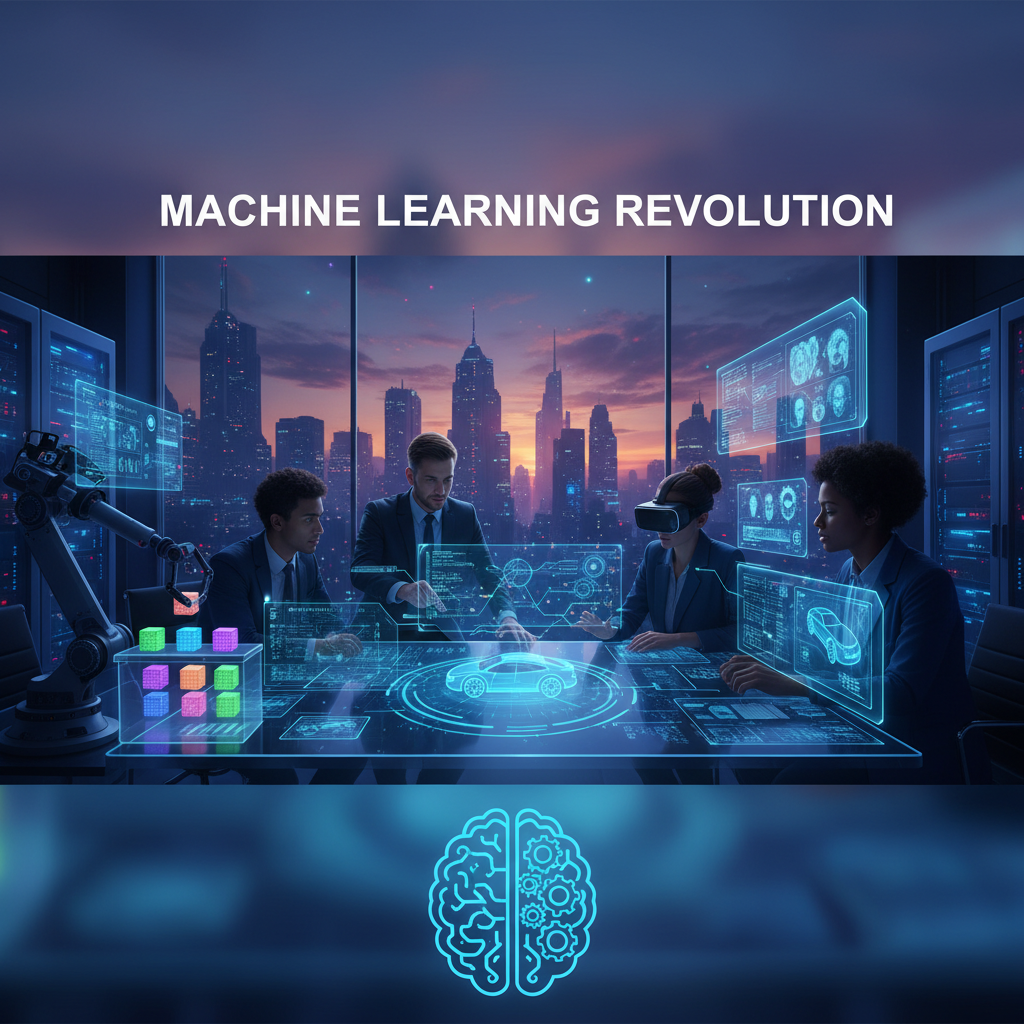
The world is changing fast, and many of these changes are powered by machine learning. In fact, countless machine learning applications are already woven into our daily lives. This technology allows computers to learn from data and make smart decisions without being explicitly programmed. Consequently, it has opened doors to new ideas, better efficiency, and more personal experiences. From helping doctors diagnose illnesses to guiding self-driving cars, the uses for this technology are huge and growing every day.
Table of Contents
- Key Machine Learning Applications in Healthcare
- Financial Machine Learning Applications: Security & Trading
- How Machine Learning Applications Reshape Retail
- Entertainment Powered by Intelligent Algorithms
- The Future of Transport: Self-Driving Car Applications
- NLP: The Core of Modern Machine Learning Applications
- Frequently Asked Questions About Machine Learning Applications
- What is the most common machine learning application?
- How do I start learning about machine learning?
- Are machine learning and AI the same thing?
- Conclusion: The Ever-Expanding Impact
Key Machine Learning Applications in Healthcare
In healthcare, machine learning is making a massive difference. It helps improve patient health and makes medical tasks easier. For instance, algorithms can study huge amounts of medical data. This includes patient files, genetic info, and medical scans. They find patterns that people might miss. This is very important for diagnosis. Machine learning models can be trained to spot diseases like cancer in X-rays and MRIs. Often, they do this with incredible accuracy, sometimes even better than human experts. Therefore, early disease detection becomes more common, leading to faster and better treatment.
Furthermore, this technology is vital for creating personal treatment plans. By looking at a person’s unique genes and health history, algorithms can suggest the most effective treatments. This personalized approach is a big step forward from older, one-size-fits-all methods. In fields like cancer treatment, where patient responses vary greatly, this is especially valuable. Additionally, some of the most useful machine learning applications speed up the creation of new drugs. They do this by predicting how different chemicals will interact, which saves a lot of time and money in research.
Financial Machine Learning Applications: Security & Trading
The finance industry uses machine learning to improve security and make smarter choices. One of the most critical machine learning applications here is fraud detection. Banks and financial companies handle millions of transactions every single day. Algorithms can check all this data in real-time. They look for strange patterns that might signal fraud. For example, if a purchase is made far from your usual location, the system can flag it. This simple step helps prevent major financial losses for both customers and companies.
Machine learning also drives algorithmic trading. In this area, complex computer models make trades at very high speeds. These systems review past market data to predict future market trends. Then, they make trading decisions in just fractions of a second. This is something no human trader could ever do. It not only makes trading more efficient but also finds small market patterns to capitalize on. Moreover, machine learning is used to mitigate potential financial risks by analyzing data to identify threats early. It also helps in assessing loan applications more fairly and accurately.
How Machine Learning Applications Reshape Retail
In the retail world, technology is changing how stores connect with shoppers and run their business. A major change comes from personalizing the shopping experience. You have likely seen this with recommendation engines. These systems, powered by machine learning, look at what you’ve browsed, what you’ve bought, and even how you move your mouse. Then, they suggest other products you might like. This personal touch makes shopping more enjoyable and also helps increase sales.
Beyond what the customer sees, machine learning also improves the supply chain. Algorithms can predict product demand with high accuracy. They do this by analyzing sales history, market trends, and even weather forecasts. As a result, retailers can manage their inventory much better. They avoid having too much stock or running out of popular items. This cuts costs and makes the whole operation smoother. Additionally, the technology helps plan the best delivery routes, saving fuel and time.
Entertainment Powered by Intelligent Algorithms
The entertainment industry has also been transformed. Streaming services, in particular, depend on machine learning to keep users happy. Platforms like Netflix and Spotify use recommendation systems to suggest content. These systems analyze your viewing or listening habits, your ratings, and what time you use the service. Based on this, they offer a list of movies, shows, or songs just for you. In fact, a large portion of what people watch on these platforms comes from these smart suggestions. These powerful machine learning applications are key to keeping users engaged and subscribed.
Interestingly, machine learning is now helping to create content too. Algorithms can review scripts to find story elements that audiences love. Some can even generate music or assist with creating complex visual effects. This shows how machine learning is growing from just recommending content to actively helping in its creation.
The Future of Transport: Self-Driving Car Applications
Perhaps one of the most exciting uses of machine learning is in self-driving cars. These autonomous vehicles use a mix of sensors, cameras, and advanced algorithms. This setup allows them to see the world around them and make driving decisions in real-time. The algorithms are trained on huge amounts of driving data. This teaches them to recognize pedestrians, other cars, and road signs. This continuous learning is what makes them safe.
The technology is essential for navigating busy and unpredictable roads. Using techniques like deep learning and reinforcement learning, these vehicles get better with every trip. They learn from new situations and adapt. Beyond just the cars, machine learning can also be used to manage traffic flow. By coordinating vehicles, it could reduce traffic jams and improve fuel economy for everyone.
NLP: The Core of Modern Machine Learning Applications
Many of the amazing tools we use are built on Natural Language Processing (NLP). This is a branch of AI that helps computers understand human language. For instance, NLP is the magic behind virtual assistants like Siri and Alexa. It lets them understand your voice commands and give helpful replies. It’s also the core technology for translation services like Google Translate. These services use machine learning to accurately translate words and sentences between languages.
Chatbots are another great example. Many companies use them for customer service. These automated bots can understand customer questions and provide quick answers. This makes customer support much faster and more efficient, improving the overall experience.
Frequently Asked Questions About Machine Learning Applications
Here are answers to some common questions about this exciting technology.
What is the most common machine learning application?
Recommendation engines are one of the most widespread machine learning applications. You can find them on e-commerce sites, streaming services, and social media platforms, personalizing your experience everywhere.
How do I start learning about machine learning?
Many online platforms offer courses on machine learning, from beginner to advanced levels. Starting with basic concepts in statistics and programming (like Python) is a great first step for anyone interested.
Are machine learning and AI the same thing?
Not exactly. Machine learning is a subset of Artificial Intelligence (AI). AI is the broader field of making machines intelligent, while machine learning is the specific method of teaching them to learn from data.
Conclusion: The Ever-Expanding Impact
In conclusion, machine learning applications are no longer science fiction; they are a real and powerful part of our modern world. From making healthcare more personal to making finance more secure, this technology is a key driver of progress. As it continues to improve, its impact will only grow. It holds the promise of solving some of our biggest challenges and will continue to change how we all live and work for the better.